The eight species of fungi have depicted on the Tanzania's miniature sheet of stamps described in the following:
Coprinus comatus
Coprinus comatus, the shaggy ink cap, lawyer's wig, or shaggy mane, is a common fungus often seen growing on lawns, along gravel roads and waste areas. It occurs widely in grasslands and meadows in Europe and North America. It appears to have been introduced to Australia, New Zealand and Iceland.
The young fruiting bodies first appear as white cylinders emerging from the ground, then the bell-shaped caps open out. The cap is mostly white with shaggy scales, which are more pale brown at the apex. The gills beneath the cap are white, then pink, then turn black and secrete a black liquid filled with spores . The stipe has a loose ring and measures 10-37 cm high by 1-2.5 cm diameter. The flesh is white and the taste mild.
When young it is an excellent edible mushroom provided that it is eaten soon after being collected. The species is cultivated in China as food.
Amanita vaginata
Amanita vaginata, commonly known as the grisette, is an edible mushroom in the Amanitaceae family of fungi. The cap is gray or brownish, 5 to 10 centimetres in diameter, gray to grayish-brown in color. The gills are white, free. The flesh is white and thin, and does not change color upon bruising or injury. The stem is 8 to 22 centimetres long and 1 to 2 centimetres thick. The stem surface is covered with a finely powdered bloom (pruinose), especially near the top; faint longitudinal lines may be seen. The spore print is white.
As a mycorrhizal species, Amanita vaginata grows singly or numerous in both coniferous and hardwood forests.
This species is widely distributed in North America. It is also found in the Azores, Australia, and Scotland.
Although not poisonous, it is to be careful against consumption due to the possibility of mistaking it for other poisonous species of Amanita.
Clitocybe Geotropa
Clitocybe Geotropa is the one species of the genus Clitocybe. Hundreds of species of mushrooms compose the fungus genus Clitocybe. They are characterized by white, off-white, buff, cream, pink, or light-yellow spores, gills running down the stem, and pale white to brown or lilac coloration. They are primarily saprotrophic, decomposing forest ground litter.
A few members of the genus are considered edible; many others are poisonous, containing the toxin muscarine among others. Therefore, with the exception of a few charismatic and readily identified members, Clitocybe mushrooms are rarely collected for consumption.
Cortinarius violaceus
Cortinarius violaceus is a mushroom in the genus Cortinarius. It can be found in North America, where it grows primarily in coniferous woodland, and in Europe, where it favours hardwoods. However, it is comparatively rare on both continents. The mushroom grows solitarily or in small groups, often near rotting wood.
Mycological characteristics : gills on hymenium, cap is convex or flat cap of 3.5 to 15 centimetres across with an incurved margin, cap’s color in a dark violet to blue-black, the stem is 6 to 12 centimetres tall, while 1 to 2 centimetres thick, hymenium is adenate, stipe is bare, spore print is reddish-brown, ecology is mycorrhizal, edibility: edible, but is not choice. The flesh of C. violaceus has a mild taste, with a slight smell reminiscent of cedar-wood.
Russula sardonia
Russula sardonia, known as the The primrose brittlegill, is a mushroom of the Russula genus, which are commonly known as Brittle Gills. The fruiting body, or mushroom, is a reddish-purple, the colour of blackberry juice, and is found in coniferous woodland in summer and autumn, across Britain and Nothern Europe. Mycological characteristics : gills on hymenium, cap is convex or depressed and grows to 10 cm in diameter, colour of cap commonly purplish- red, stem is white and 3-8 cm in tall, 1-1.5 cm in diameter, hymenium is adnexed, stipe has a bare, spore print is cream, edibility: inedible, poisonous
.
Cortinarius collinitus
Cortinarius collinitus is a species of fungi in the family Cortinairiaceae.
Mycological characteristics : gills on hymenium, cap is convex, hymenium is adnexed, stipe has a Cortina,spore print is reddishbrown, ecology is mycorrhizal, edibility: unknown.
The cap is 3–9 cm in diameter, convex to flat in shape, with a sticky, gelatinous surface (in moist conditions). The gills are adnexed, close, and pallid or pale violet in color. The stipe is typically 6–12 cm long and 1–1.5 cm thick, solid, equal, and has transverse scaly-looking bands.
Boletus aereus
Boletus aereus is a bolete, an edible mushroom frequently consumed in the Basque Country and Italy. It is commonly known as ontto beltza in Basque, porcino nero in Italian, and tête de nègre (negro’s head) in French.
The height of this boletus is 15–20 cm, broad at maturity. The cap is dark brown and the ringless stalk is 6–10 cm high, usually shorter than the cap diameter. The mushroom has tubes and pores, instead of gills beneath its cap. The pores are greyish white when young, then become yellow.
Boletus aereus is found mainly in central and southern Europe, being rare in colder climes such as England. Mushrooms are found in summer and autumn.
Lepiota
Lepiota is a genus of gilled mushrooms, in the order Agaricales. Though they have white spores, they are related to the familiar brown spored mushrooms of the genus Agaricus. They typically have rings on the stems, which in larger species are detachable and glide up and down the stem. The cap usually has scales: the colours of the cap, gills and scales are important in determining the exact species, as is sometimes the smell. This is a genus to be avoided as several species contain amanitins and are highly toxic.


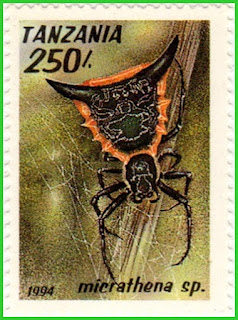


 Salticus is a spider genus of the Salticidae family (jumping spiders).It is typically marked with a black and white pattern, with some featuring transverse stripes, often gaining them the popular name "zebra spiders". Mature males have very long chelicerae on which they rest their long, thin pedipalps. Females are from 3.5 to 7 mm long, males up to 5 mm. Salticus are often found on rocks and tree trunks, where the sun can reach. This species distributed in the Mediterranean region, South Asia, South Africa.


